Almost every Hindu puja ends the same way. The lamps are circled, the bell is rung, and at the close a small piece of camphor is lit and offered to the deity.
It is one of the most beautiful moments in our tradition, and there is a lovely meaning behind it.
A flame that leaves nothing behind
Camphor has a rare quality. It sublimes — it passes from solid straight to vapour, without melting — and when it has finished there is nothing at all on the plate. No wax, no ash, no mark.
That is the whole image, and it is a profound one. The devotee offers the self to the divine exactly as camphor offers itself to the flame: completely, joyfully, leaving nothing of itself behind. Ghee leaves a mark. A wick leaves ash. Camphor simply becomes light and fragrance and is gone.
This is why camphor closes the ceremony rather than opening it. It is the final offering, and the most complete one.
The light you take home
The flame itself carries the second half of the meaning. Camphor burns clear and bright. In the moment the aarti plate is raised, that light falls on the face of the deity and the devotee sees it illuminated.
The custom of passing the palms over the flame and then over one's own eyes belongs to that moment. You are taking the light of what you have just seen, and carrying it with you.
The practical wisdom in the custom
Our ancestors were practical people, and the choice of camphor was a wise one in everyday terms too.
- It keeps the shrine clean. A temple that burns camphor daily for a hundred years has no residue on its idols.
- It freshens a closed room. A prayer room is usually small and often shut. Camphor's aroma is clean and dry, and it lifts a room immediately.
- It protects the offerings. Flowers, fruit, milk and sweets are left out. Camphor's fragrance keeps insects away from them.
- It is quick and easy to carry. A camphor flame lasts under a minute and the holder stays cool enough to take around a room full of people.
Meaningful and useful at the same time. That is usually why a tradition lasts.
How to perform camphor aarti at home
It is simple, and children love doing it.
- Place one camphor tablet in a camphor holder or on a clean steel plate.
- Light it and let the flame settle for a moment.
- Circle the flame clockwise before the deity, three times, starting at the feet and rising.
- Ring the bell, or let the family sing, while you circle.
- Let the flame finish on its own, then pass your palms over the warmth and over your eyes.
Keep the plate clear of curtains, garlands and loose clothing, open a window, and let it burn out rather than blowing it out. Keep camphor stored closed and out of reach of small children.
Camphor through the festival year
Camphor has its own place in every major celebration. At Diwali it is lit through the evening as lamps are placed around the house. At Ganesh Chaturthi it is offered morning and evening through all the days of the festival. At Navratri it closes each night's aarti. At housewarmings and weddings it is burnt to bless a new beginning.
For festivals, most families use Bhimseni flakes — the aroma carries further and fills a larger room.
Pure Bhimseni flakes from camphor tree wood — the traditional choice for festivals and temple puja.
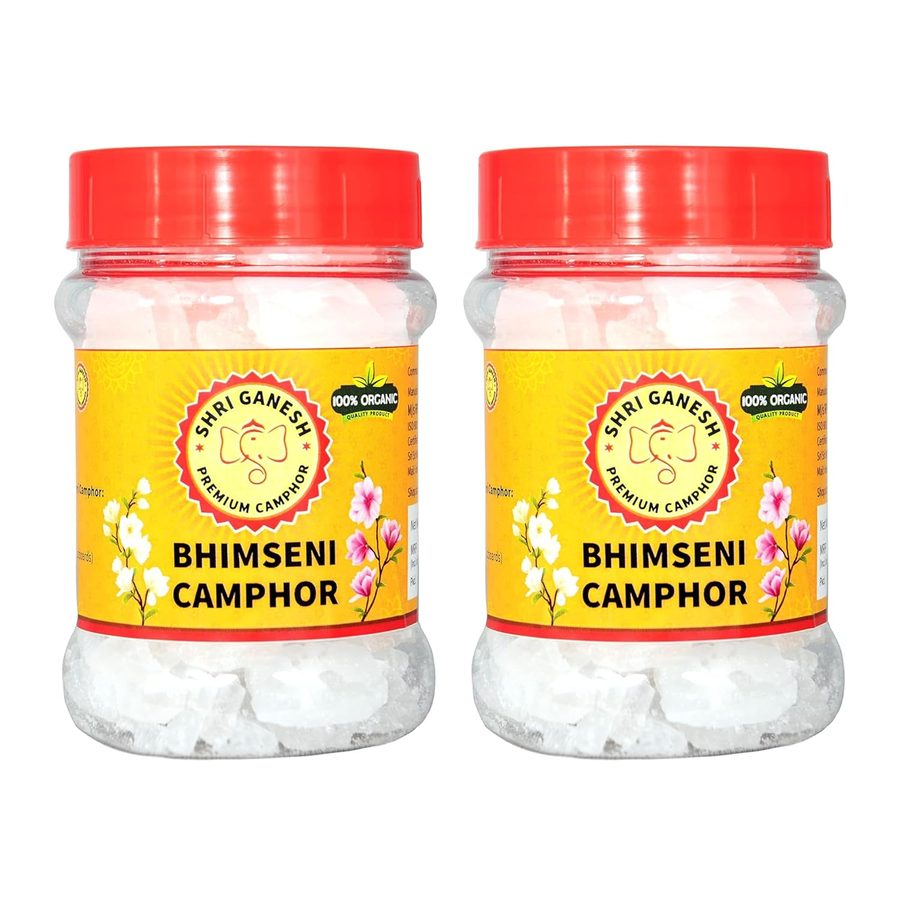 200g — 100g × 2 jars
View on Amazon
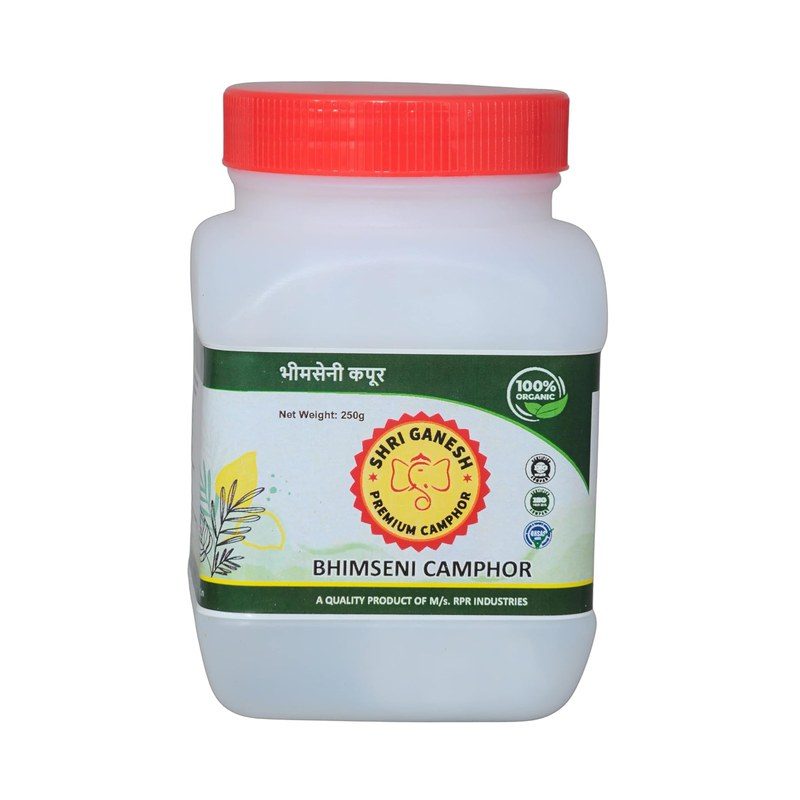 250g jar
View on Amazon
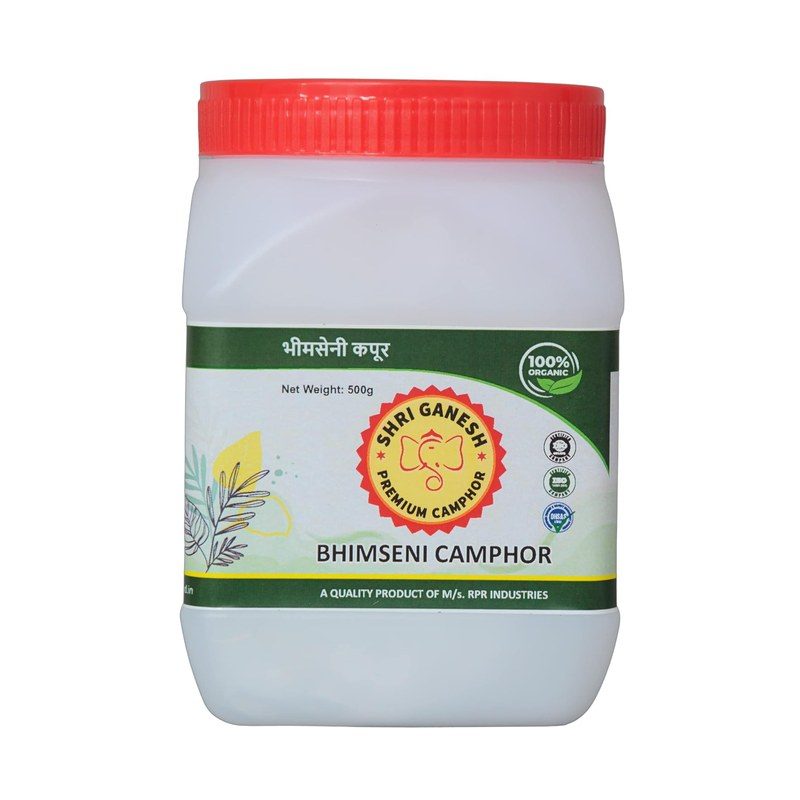 500g jar
View on Amazon
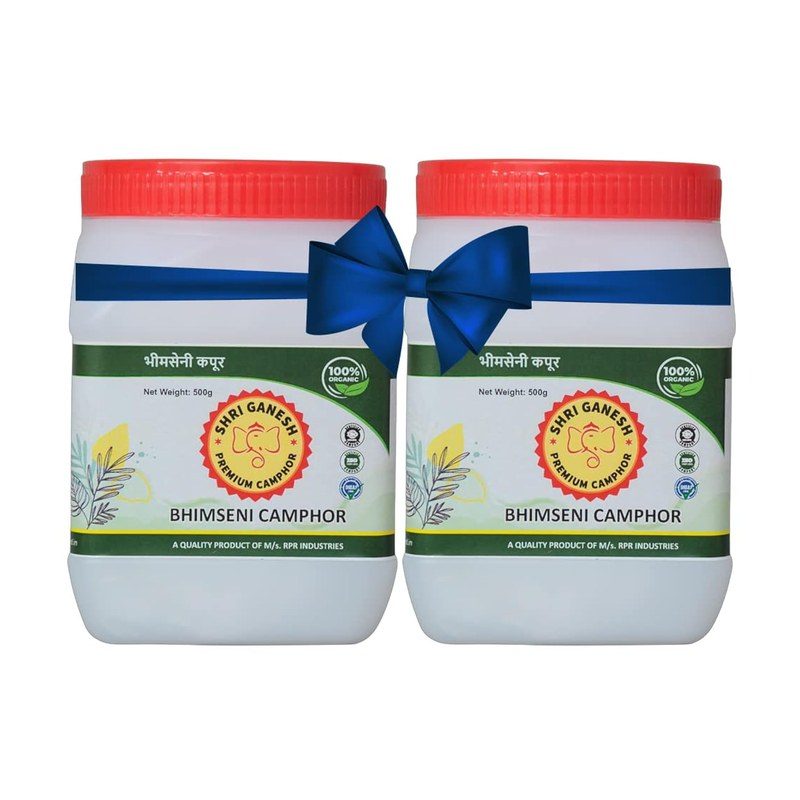 1kg — 500g × 2 jars
View on Amazon
Even-sized, clean-burning tablets from pine tree resin — ideal for daily aarti at home.
See the full range on Amazon.in →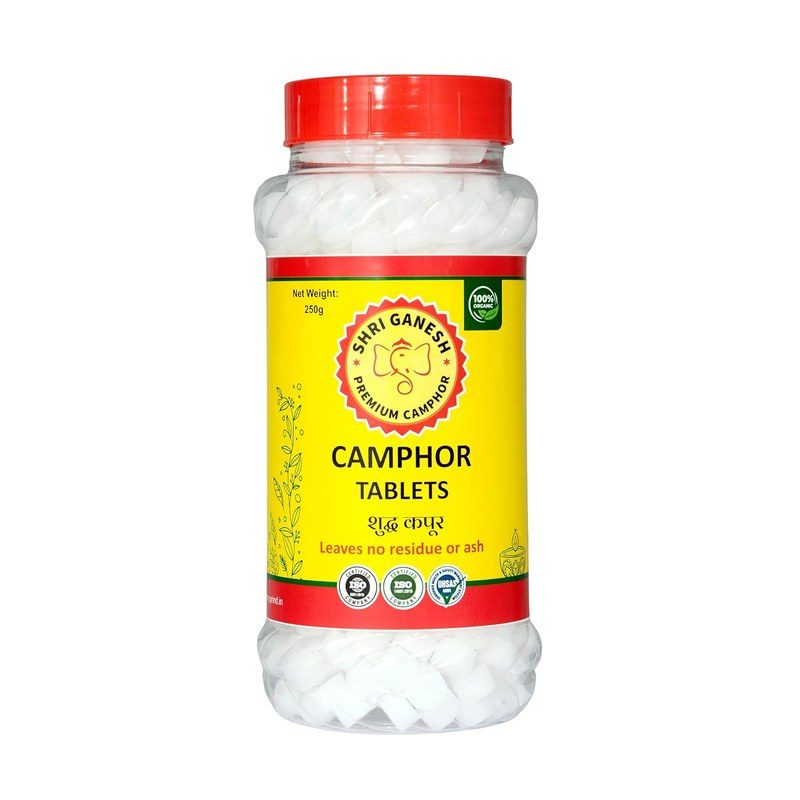
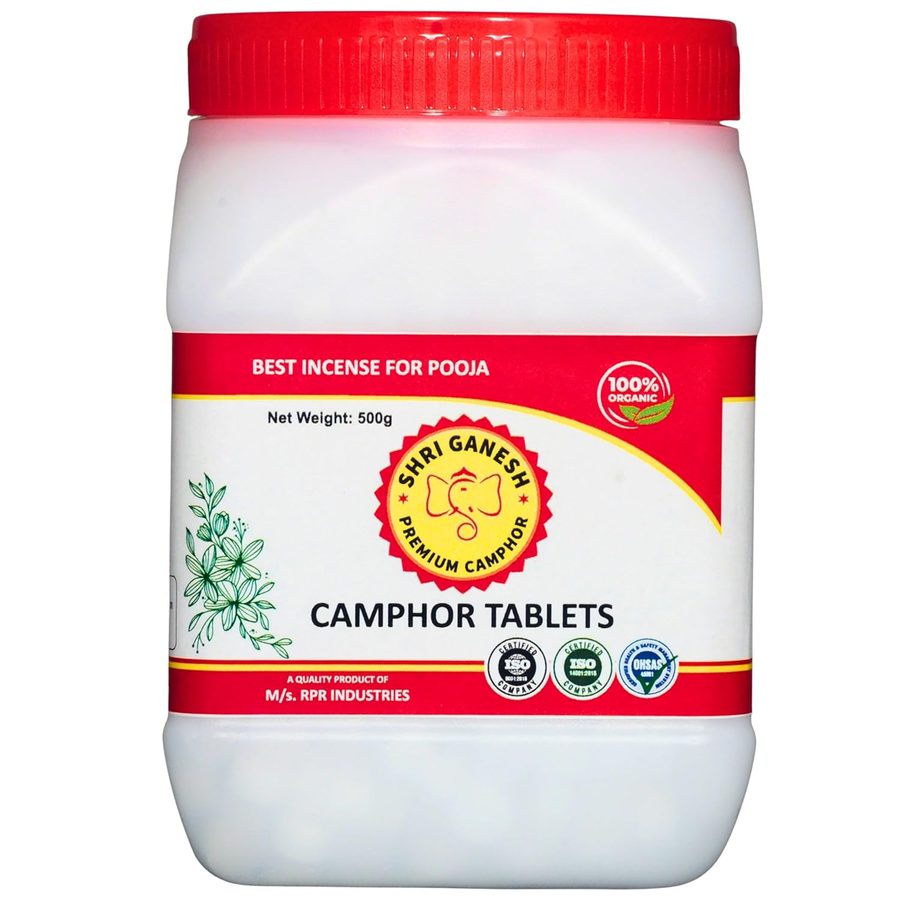

Made in our own plant
Shri Ganesh Premium Camphor has been made at our own unit in Mancherial, Telangana, since 2015, under M/s RPR Industries, which holds ISO 9001, ISO 14001 and ISO 45001 certification.
We make camphor for exactly this moment in the day, and we take it seriously.